
How to Search Criminal Dockets
Begin with the free Colorado Judicial Branch Docket Search. Pick San Miguel as the county. Then narrow to County or District if you know which. One filter beyond the date is required. A party name can surface a hearing; a case number works better. Type the number as separate year, class, and sequence fields.
A calendar hit is only a hearing slice. It is not the full San Miguel County criminal Register of Action. The Colorado criminal Register of Actions rule lays out the chronological record. For the whole chronology, use a vendor listed in the official Access Guide, or ask the San Miguel Combined Court clerk for the ROA. The vendor route costs money and may skip cases. It shows no document images, and is not the official court record. The clerk's copy is.
- Select San Miguel County and the likely court level.
- Enter a name or split the case number into year, class, and sequence.
- Compare the case number and court before opening the hearing result.
- Read the newest setting, appearance type, and courtroom fields.
- Request the ROA or disposition order when the calendar is not enough.
San Miguel Criminal Docket Classes
Searching only class CR can hide a San Miguel County criminal matter. County Court holds misdemeanors. It also holds petty matters, traffic cases, and early felony complaints. District Court takes felonies. That applies once a case is bound over or filed there directly. Town-code offenses stay with the municipal court that issued them. Use class and court level together as a pair.
- CR
- District criminal class commonly used for felony matters.
- M
- Misdemeanor class in County Court.
- T
- Traffic class for state-law traffic cases.
- R
- A class exposed by the calendar and useful in a broad criminal search.
The state system shows numbers in this shape: 2026CR25, 2026M2, and 2026R73. They illustrate the format only. No party is identified.
What a Criminal Docket Shows
Think of the San Miguel County criminal ROA as a chronological index. It names the court, division, judge, and parties, plus public charges, plea, findings, sentence, filed events, scheduled hearings, disposition, and a limited financial summary. The free calendar shows just the setting slice. Bond detail, the full charge block, plea history, and filed documents stay off it.
| Case Number | Year, class, and sequence, such as 2026CR25. |
|---|---|
| Charge | Filed offense, statute, and classification when public. |
| Settings | Date, time, hearing type, location, courtroom, and appearance type when entered. |
| Plea and Finding | The recorded plea and court or jury finding. |
| Disposition | Dismissal, acquittal, plea or verdict, sentence, and later case events. |
Remote access generally withholds free text, contact data, victim or witness details, and some financial data. A blank field proves nothing about what happened.
San Miguel Criminal Calendar Limits
Why would a San Miguel County criminal calendar result leave out charges? The state docket tool exists to show scheduled hearings. A result card may carry date, time, duration, hearing type, location, appearance type, and courtroom. It was never built as a full case history.
Calendar versus case record: A hearing card answers when and where. The ROA answers what has been filed and how the criminal case has moved.
When a San Miguel County docket card falls short, the Access Guide to Public Records lists real-time ROA vendors and spells out their limits. For anything official, a clerk-issued ROA or a filed order still wins.
Stages on a Criminal Docket
A San Miguel County criminal case opens with a complaint, information, or felony complaint and gets its year, class, and sequence. Then comes a first hearing or advisement. An early felony complaint in County Court may move to District Court after a preliminary hearing or a waiver of one. Misdemeanors usually stay put in County Court.
Docket flow: Filing › Arraignment › Pretrial › Plea or Trial › Disposition › Sentencing
Later San Miguel County criminal docket entries might show a mittimus, probation review, appeal, warrant, or bond forfeiture. A bond forfeiture or failure-to-appear entry is an event, not a ruling on guilt. A deferred judgment is not an acquittal or a final conviction either; its effect depends on the order and later compliance.
San Miguel Criminal Record Channels
The San Miguel Combined Court clerk holds both County Court and District Court criminal files, on the courthouse's second floor at 305 W. Colorado Avenue in Telluride. The elected County Clerk & Recorder sits on the first floor but keeps no court dockets.
Reach the clerk counter Monday through Thursday, call 970-369-3310, email SanMiguelClerk@judicial.state.co.us, fax 970-728-6216, or mail P.O. Box 919. A statewide record form can request a Complaint/Information, Disposition/Sentence Order, Protection Order, Ticket, or Register of Action. Expect an answer within three business days unless unusual circumstances apply. Older San Miguel County criminal files may need off-site retrieval at actual cost. No official source promises a public terminal, so ask the clerk about on-site electronic inspection.
Municipal cases run on a separate track. Telluride, Mountain Village, Norwood, and Ophir clerks keep their own town-code records, so the Combined Court clerk may rightly have no matching file. Colorado Courts E-Filing serves attorneys and authorized users, not anonymous public searching.
Which Court Holds Criminal Dockets
Where a case lives depends on its charge. County Court, Division G, hears San Miguel County misdemeanors, petty and traffic matters, and felony complaints before transfer. District Court takes over after bindover or direct filing. Both courts sit within San Miguel Combined Courts in the 7th Judicial District and share one clerk contact. Municipal charges never land in that shared state file. Telluride Municipal Court handles Telluride code matters. Mountain Village Municipal Court hears charter and ordinance cases, Norwood Municipal Court covers town cases, and Ophir Municipal Court deals with ordinance and specified land-use matters. If a matter moves or is appealed, the higher court opens its own record. Search the receiving court.
San Miguel Criminal Filing Scale
For scale, the Colorado Judicial Branch FY2024 statistical report lists 54 District Court criminal filings for San Miguel County. The count is District Court work only. County misdemeanors and municipal-code matters are tallied in other categories, so the figure is not all local criminal work. It says nothing about case length. Nor does it reveal how many hearings filled each docket.
The district spans six counties and roughly 10,000 square miles, so judges travel widely. Court settings can shift accordingly. Confirm the setting with the clerk first.
San Miguel Criminal Disposition Orders
A calendar line that reads “Disposition Hearing” is only a setting. The signed Disposition/Sentence Order is the paper that fixes the outcome and the sentence. Vendor ROAs can summarize what happened, but they miss details and show no image of the order itself.
For the real San Miguel County criminal disposition, use the statewide court record request form. Pick San Miguel, add the case number or party and year, then check Disposition/Sentence Order or ROA. Certification matters only if you need an authenticated copy. A certified or exemplified copy runs $20 per document, plus copying fees where they apply.
Note: A criminal calendar is handy for a court date, but it is not a certified statement of the case outcome.
San Miguel Criminal Specialty Dockets
Montrose Adult Drug Court is the district's problem-solving program. It is based in Montrose. The state accredited it in 2024. San Miguel County lists no separate specialty criminal calendar of its own. The Colorado Judicial Branch accreditation announcement documents that district-level milestone for the 7th Judicial District.
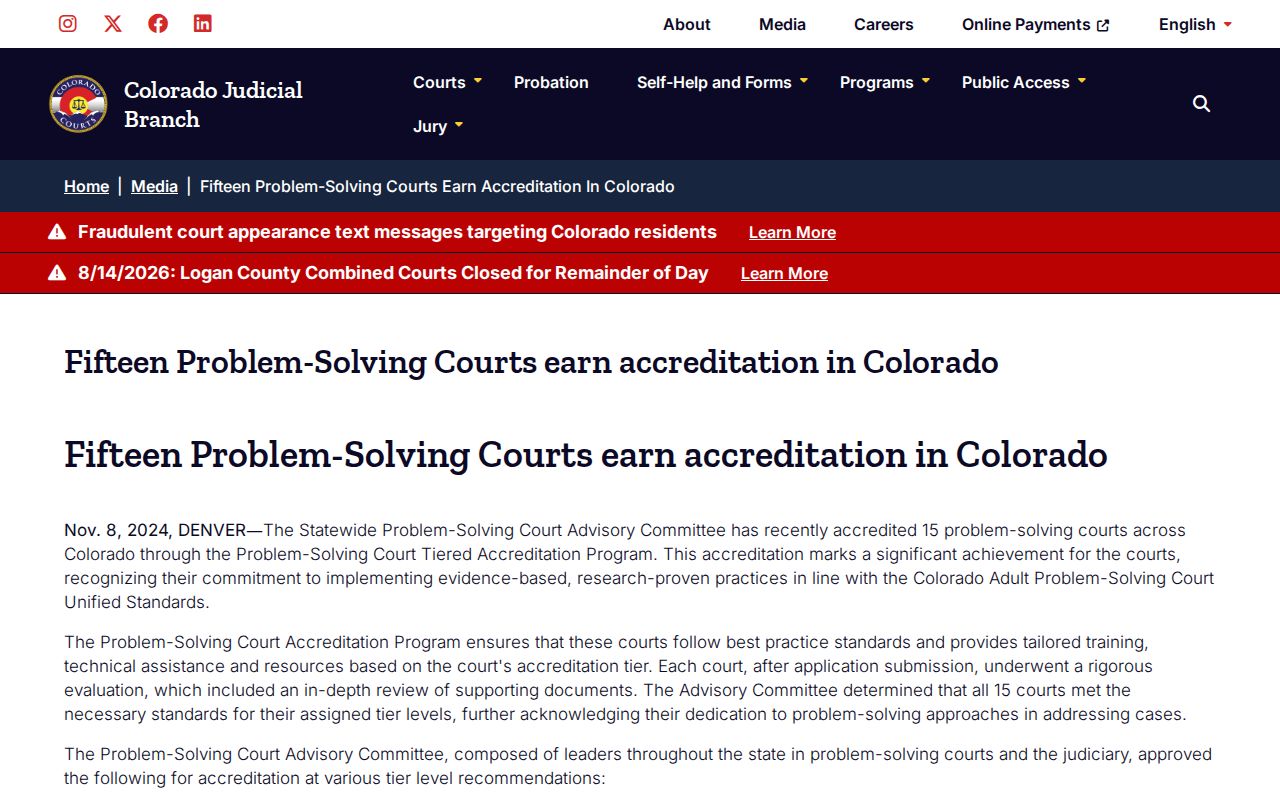
District-level programs serve the whole region. Participation is not a public roster, though. It creates no new San Miguel County criminal case number, and treatment or probation details may be restricted from public view.
Missing San Miguel Criminal Dockets
A blank search result proves nothing. A San Miguel County criminal case can still exist. It may be municipal, sealed, suppressed, juvenile, or archived. It might also sit under another class or outside a vendor’s coverage, and the reason shapes the next move. Check County and District Court plus the CR, M, T, and R classes. A municipal matter belongs with the issuing town clerk. State cases go to the Combined Court. An authorized person seeking a protected file may need government-issued photo identification, and older records can enter the archive retrieval queue. The automatic sealed-case confirmation tool is far narrower than a general San Miguel County criminal docket search.
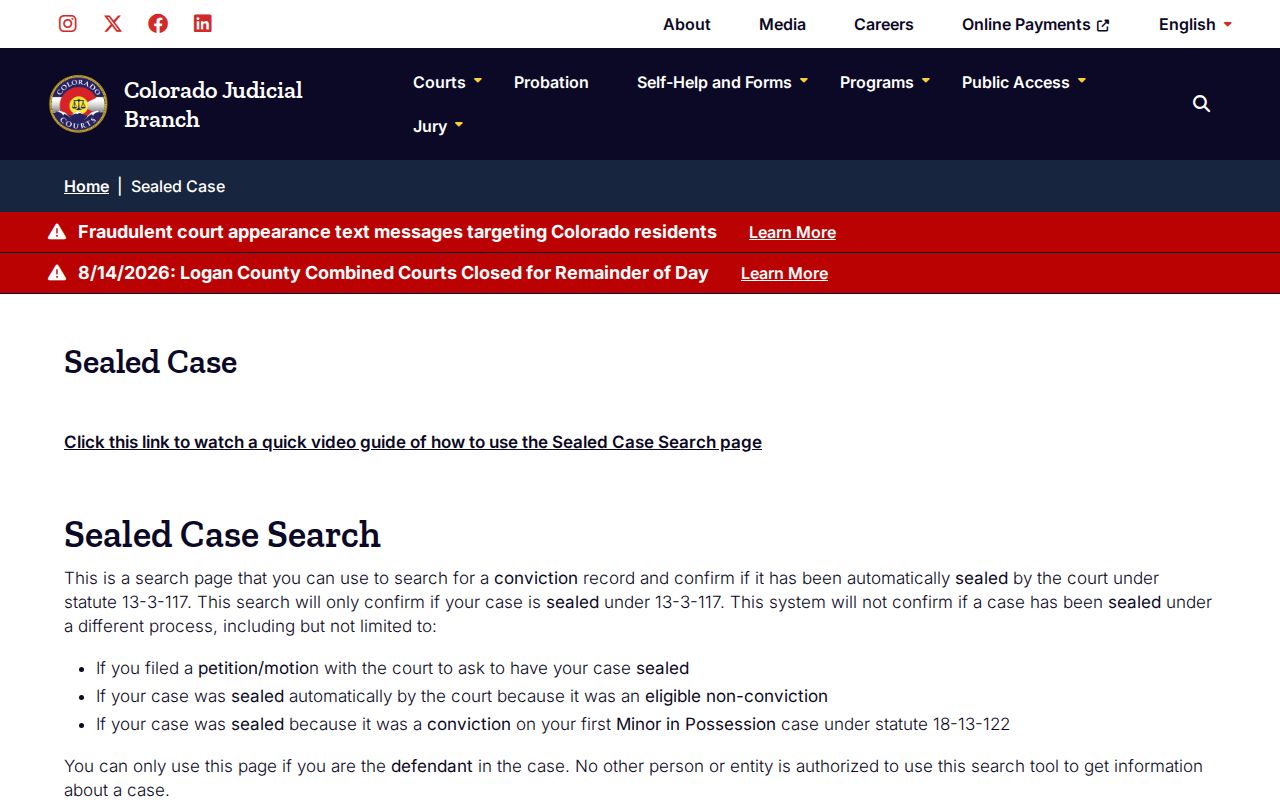
It checks one case at a time. You must supply identity data, declare that you are the defendant, and the tool covers only eligible automatic sealing under state law.
Public Access and Sealed Criminal Dockets
Colorado sorts court records by access level. Public records are open. Protected records turn public after redaction. Restricted records stay with court staff, parties and counsel, and criminal-justice agencies. Suppressed records draw a tighter party-and-court boundary, and sealed records reach only judges and Judicial staff. For the statewide legal context around San Miguel County criminal dockets, Colorado’s legislative sealing and expungement overview is the reference.
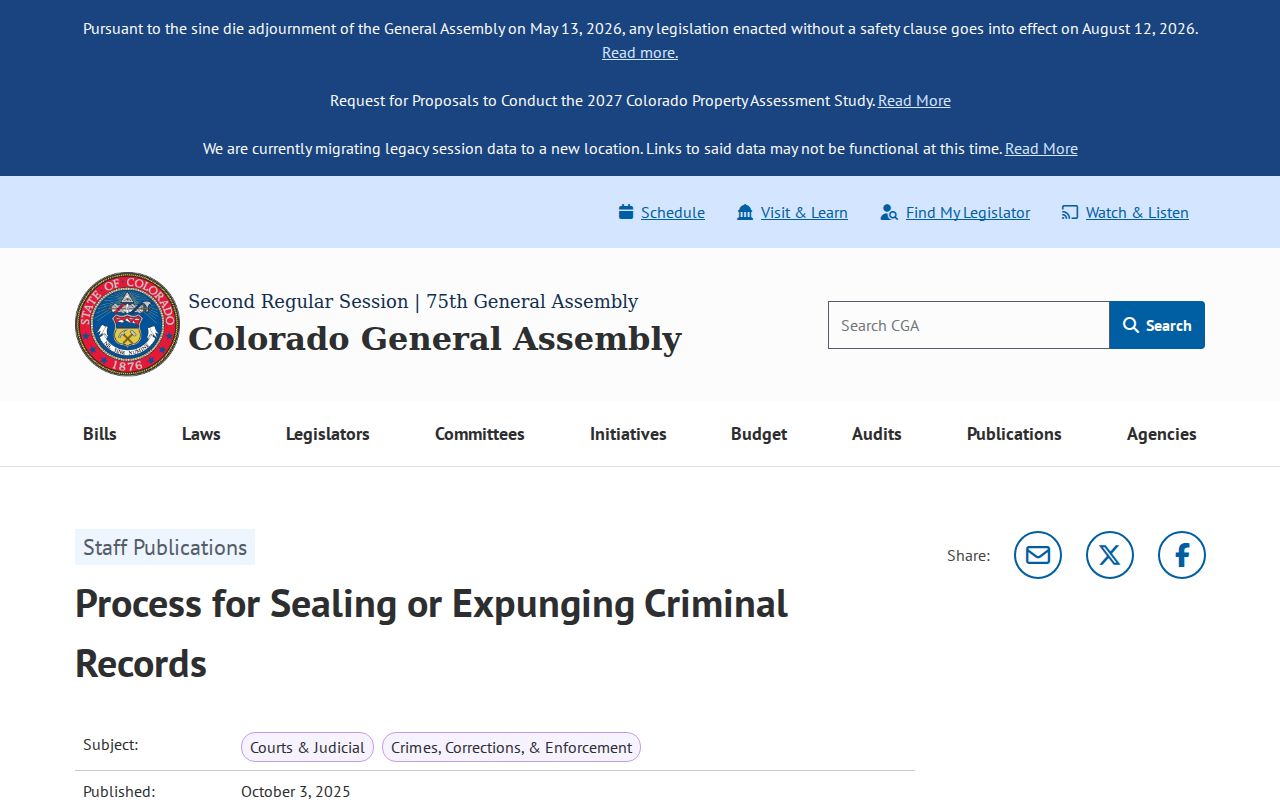
Public visibility can change once a court or an automatic process applies. A missing docket never proves dismissal, sealing, or innocence.
Key rules:
CJD 05-01 balances reasonable public access with privacy and controls remote fields, copies, exclusions, and fees.
C.R.S. §§ 24-72-304 and 24-72-305 govern inspection and permitted withholding of criminal justice records.
C.R.S. § 13-3-117 supports eligible automatic sealing and the defendant-only confirmation process.
Reading San Miguel Criminal Dockets
Some labels mark steps, not results. “First Hearing” is an initial event. “Arraignment” covers advisement and plea, “PreTrial Conference” addresses preparation or a possible resolution before trial, and a “Setting” may only assign a future event on the San Miguel County criminal docket.
- Disposition
- The recorded resolution of a case or charge.
- Sentence order
- The filed order stating punishment or other sentence terms.
- Deferred judgment
- A case-specific outcome whose later effect depends on the order and compliance.
- Bond forfeiture
- A bond-related event, not a finding on the merits.
San Miguel County publishes no official abbreviation list. Terms from another state do not apply. When a short label stays unclear, ask the Combined Court clerk, and let the signed order state the legal result.